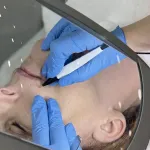

Mixed-colour facial hair can be frustrating because one treatment rarely suits every hair. You may have dark coarse hairs on the chin, lighter hairs on the upper lip, white or grey hairs along the jawline, or a combination across the lower face and neck.
Quick answer: The best treatment plan for mixed facial hair is usually laser hair removal first for dark hairs, followed by electrolysis for white, grey, blonde, red or stubborn hairs that laser cannot treat. This combination approach is often the most effective way to achieve smoother, lower-maintenance facial skin.
At DRVICTORIA™ Clinic in Edinburgh, we create personalised facial hair removal plans for women, and transgender women who want smoother skin and less daily hair removal.
What is the best treatment for mixed dark, light and white facial hair?
The best approach is usually laser hair removal for dark hairs, followed by electrolysis for light, grey, white, blonde, red or stubborn remaining hairs.
Laser hair removal
Laser works best when there is enough pigment in the hair for the laser energy to target. This makes it useful for dark, coarse facial hairs.
Electrolysis hair removal
Electrolysis works differently. It treats each hair follicle individually and does not rely on hair colour. This makes it suitable for hairs that laser cannot effectively treat, including white, grey, blonde and many red hairs.
For mixed facial hair, the goal is to use each treatment where it works best:
- Laser to reduce suitable dark hairs efficiently
- Electrolysis to clear lighter, white, grey or resistant hairs
- A planned course to work with the natural hair growth cycle
- Good aftercare to protect the skin and reduce complications
This combination approach can help achieve smoother facial skin with fewer visible hairs over time.
Why does laser hair removal work best on dark facial hair?
Laser hair removal targets pigment in the hair. The darker and thicker the hair, the easier it is for the laser to identify and heat the follicle. Laser can be helpful for:
- Dark chin hairs
- Dark upper lip hairs
- Jawline hair
- Neck hair
- Coarse facial hair
- Beard-area reduction for transgender women
- Dark hairs linked to hormonal facial hair growth
Laser is often the most efficient starting point when there are enough dark hairs to treat. It can reduce the density of hair before electrolysis is used for the remaining hairs.
However, laser is not suitable for every hair colour. It is unlikely to work well on hairs with little or no pigment.
Why is electrolysis needed for white, grey, blonde and red facial hair?
Electrolysis is often the best option for facial hairs that laser cannot treat. This includes:
- White facial hairs
- Grey facial hairs
- Blonde facial hairs
- Red facial hairs
- Very fine light hairs
- Small areas requiring precision
Electrolysis uses a fine sterile probe placed into the natural opening of the hair follicle. A small amount of energy is delivered to help disable the follicle’s ability to produce a new hair.
Because electrolysis treats each follicle individually, it is ideal for precision areas such as the chin, upper lip, jawline, cheeks and neck. It is particularly popular for blonde upper lip hairs.
It is usually slower than laser because each hair is treated one at a time. This is why electrolysis is often most effective after laser has reduced the bulk of darker hairs first.
Should I have laser or electrolysis first?
If you have a mix of dark and light facial hair, laser usually comes first. Laser can reduce the darker hairs more efficiently across the treatment area. Electrolysis is then used for white, grey, blonde, red or remaining hairs that laser cannot treat.
Step-by-step treatment plan for smoother facial skin
A successful facial hair removal plan needs patience, consistency and the right spacing between treatments.
Hair grows in cycles, which means not every follicle can be treated effectively at the same appointment. This is why a course of treatment is needed.
Step 1: Consultation and patch test
Your treatment plan should begin with a full assessment that includes:
- Hair colour, thickness and density
- Skin type and sensitivity
- Previous hair removal methods
- Hormonal factors
- Medication and medical history
A patch test is required before treatment. This helps assess how your skin responds and supports safer treatment planning. The consultation is also the time to decide which hairs should be treated with laser and which hairs will need electrolysis.
Step 2: Stop plucking, waxing and threading
Plucking, waxing, epilating and threading can interfere with results as they remove the hair from the follicle and make it harder to treat effectively.
Between appointments, I would advise shaving or using a small facial hair trimmer. Many patients worry that shaving makes facial hair grow back thicker – this is a myth. Shaving does not change the follicle, but the cut end of the hair can feel blunt as it grows through giving this impression.
Step 3: Laser hair removal for dark hairs
If you have suitable dark facial hair, laser is usually used first – with sessions commonly spaced 4 to 6 weeks apart. It is essential that the hair has been shaved before each appointment as long hairs increase the risk of skin damage.
A typical course starts with 6 sessions, although some patients need more. Hormonal facial hair may require ongoing maintenance.
During this stage, the goal is to reduce the number and thickness of dark hairs, which makes the face feel easier to manage and reduce the amount of electrolysis needed later.
Step 4: Electrolysis for light, grey and blonde hairs
Once the darker hairs are reduced, electrolysis can be used to treat the remaining hairs.
Electrolysis sessions can be weekly, fortnightly or spaced further apart depending on the number of hairs to be treated and how quickly they return. At the beginning, appointments may be more regular. As the number of hairs reduce, appointments may become shorter or less frequent.
With electrolysis is essential that the hairs to be treated are visible at each appointment, so that the electrolysis probe can be correctly placed down the hair shaft. Typically, 3 days growth is enough, but for many patients letting the hair grow can make them feel uncomfortable - which is another reason why it is better to start with laser.
Electrolysis is typically more uncomfortable than laser – so again doing laser first makes the whole process more comfortable. For particularly sensitive areas, I can discuss comfort options with you during consultation. If a local anaesthetic is appropriate, this will be assessed in line with clinic protocols.
Step 5: Review and maintenance
Facial hair removal is a process, not a single appointment. You can help the process by keeping a journal, so together we can review:
- How quickly the hair is returning
- Which colours remain
- Whether any areas are more sensitive
- Whether the treatment spacing is working
- Whether new hairs are appearing
Maintenance may be needed if facial hair is influenced by hormones, menopause, PCOS, medication or gender-affirming hormone changes. The aim is steady progress towards smoother skin, fewer visible hairs and less daily maintenance.
How long does mixed facial hair removal take?
Many patients need a plan lasting 9 to 12 months or longer if there is a lot of hair. The spacing between appointments to treat hair at the correct growth cycle is what lengthens the treatment plan. Treatment length depends on:
- How much hair is present
- How many hairs are dark enough for laser
- How many hairs need electrolysis
- Whether the growth is hormonally driven
- How consistent you attend appointments in line with your growth cycle
- Whether you avoid plucking, waxing and threading
You should see a visible improvement from about 5 months, especially if laser reduced the darker hairs quickly. Final refinement with electrolysis can take longer because each hair is treated individually.
Why consistency matters
Consistency gives the best chance of treating hairs at the right stage of growth. Irregular appointments can make progress slower and lead to frustration between sessions – so we will plan and pre-book appointments – then adjust as we monitor your growth cycle.
Frequently asked questions
Is facial hair removal safe for darker skin tones?
Facial hair removal can be suitable for darker skin tones, but treatment must be carefully selected. Laser requires appropriate technology and safe settings. Electrolysis can treat all skin tones when performed correctly.
What is the best treatment for menopausal facial hair?
The best treatment depends on the hair colour. Dark menopausal facial hairs may respond to laser, but light or very fine hairs usually need electrolysis.
Can hormonal facial hair be removed permanently?
Treated follicles can be permanently disabled, but hormones can stimulate new hairs from previously inactive follicles. This means patients with PCOS, menopause-related changes or other hormonal drivers may still need maintenance.
What is the best facial hair removal for transgender women?
For transgender women with dark beard-area hair, laser is often used first to reduce density and shadow. Electrolysis is then used for lighter, white, grey or remaining hairs and for final clearance.
Should I see my GP about facial hair?
You should consider speaking with your GP if facial hair appears suddenly, worsens quickly, is associated with irregular periods, acne, scalp hair thinning, weight changes or other new symptoms. Hirsutism can sometimes be linked to conditions such as PCOS.
Book a facial hair removal consultation in Edinburgh
If you have mixed dark, light, grey or white facial hair, you may need a combination approach to achieve the best result.
At DRVICTORIA™ Clinic in Edinburgh, either I or Sara can assess your hair type, skin type and treatment goals, then recommend whether laser, electrolysis or both treatments are right for you.
Book your consultation today and take the first step towards smoother, more confident skin.
Mauri
Author experience
Mauri has medical degree from the Philippines with more than 10 years’ experience in general practice and family care. At DRVICTORIA™ Clinic in Edinburgh, she provides laser hair removal, electrolysis hair removal, cryotherapy and microneedling treatments under the clinical oversight of the Clinic’s Clinical Director. Mauri holds certification in both laser hair removal and electrolysis, giving her practical experience in planning treatment for mixed facial hair, including dark hairs suitable for laser and lighter, grey or white hairs that require electrolysis. Her approach is careful, supportive and consultation-led, helping patients understand which treatment is most appropriate for their skin type, hair colour and long-term goals.
Resources
- British Association of Dermatologists (2021) Hirsutism. (Accessed: 4 May 2026).
- Primary Care Dermatology Society (2025) Hirsutism. (Accessed: 4 May 2026).
- NHS (2025) Excessive hair growth (Hirsutism). (Accessed: 4 May 2026).